
Why Poker Beats the Bowling Alley for Team Events
The honest mechanics of why card tables mix departments better than any icebreaker, and what that means for your next corporate event.
HR teams book poker nights for the same reason they book anything: they need a room full of people who would never normally talk to actually talk. The difference is that a poker table does it without anyone noticing, which is precisely why it works when the trust-fall exercise does not.
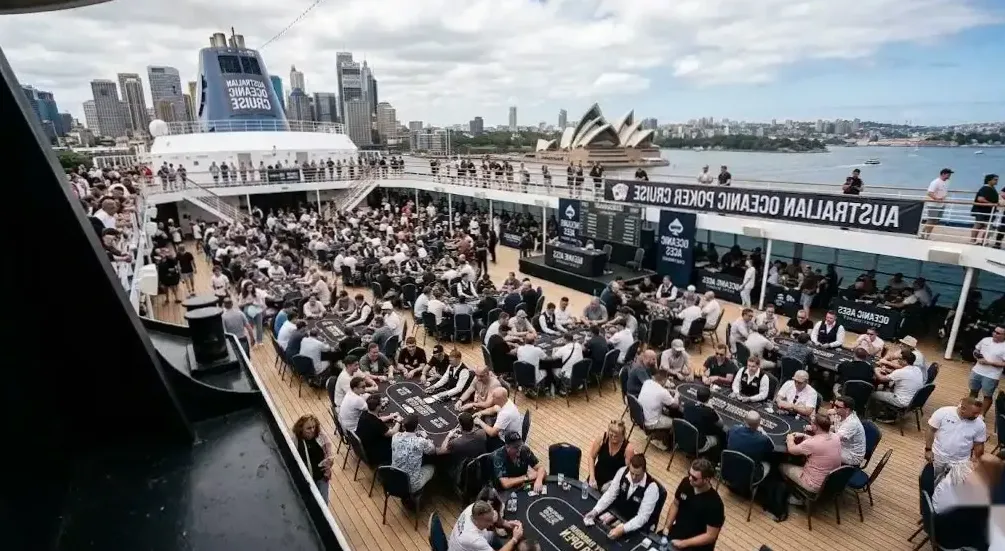
After producing corporate events for twelve seasons, we can explain exactly why the format performs, and it has nothing to do with gambling.
The Mixing Problem Is a Design Problem
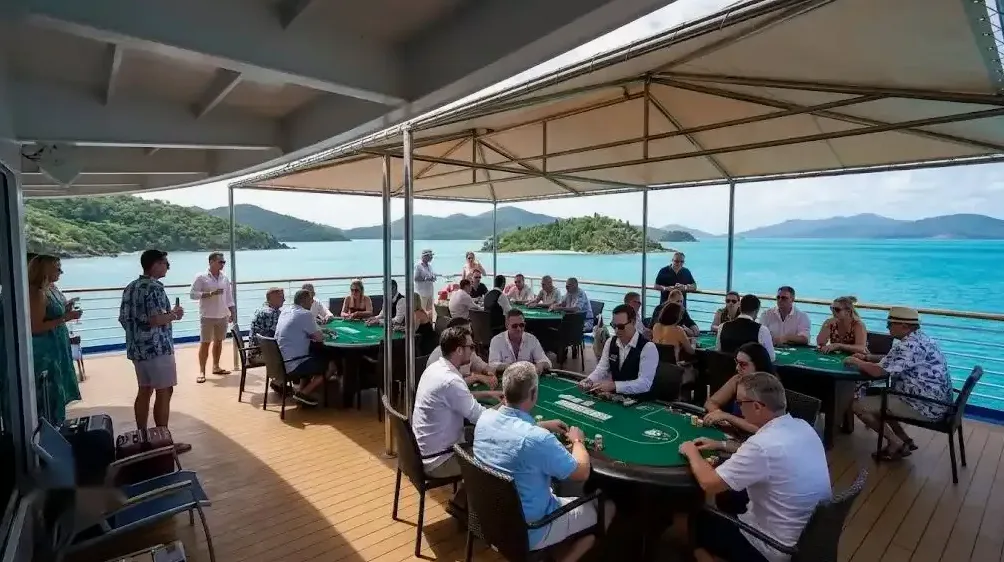
Corporate events fail socially for a structural reason: they leave seating and conversation to chance, and chance puts people next to the colleagues they already know. A poker table fixes this mechanically. Seats are drawn randomly, the table is nine strangers, and the game supplies a conversation that does not require anyone to perform small talk.
Within one level, the junior analyst is advising the CFO on a bet. By the dinner break, the table has an in-joke. We have watched this happen thousands of times and it works every time because the game does the socialising instead of the guests.
What a Poker Table Actually Teaches
Teams learn who their colleagues are under light pressure. You see who calculates and who gambles, who sulks after losing a pot and who congratulates the winner, who helps the beginner at seat three. These are useful things to know about coworkers and impossible to see in a meeting room.
It also flatters everyone equally. Bowling rewards the three people who bowl; trivia rewards whoever remembered the nineties. Poker at a friendly table rewards attention and nerve, which spread across a workforce far more evenly than any sport does.
You learn more about a colleague across a poker table in one night than across a desk in one year.
Picking the Right Format
Not every corporate crowd wants the same night. The three structures we run most often solve different briefs, and picking the right one is the whole job.
Field Notes
- Solo tournament for departments that need mixing. Random draw maximises new connections.
- Teams format for cross-division work. Table talk becomes literal teamwork.
- Casino Royale for celebrations. Roulette and blackjack keep non-poker guests equally busy.
- Masterclass for training budgets. Ninety minutes of pro instruction reads as development, not party.
Justifying It to the Budget
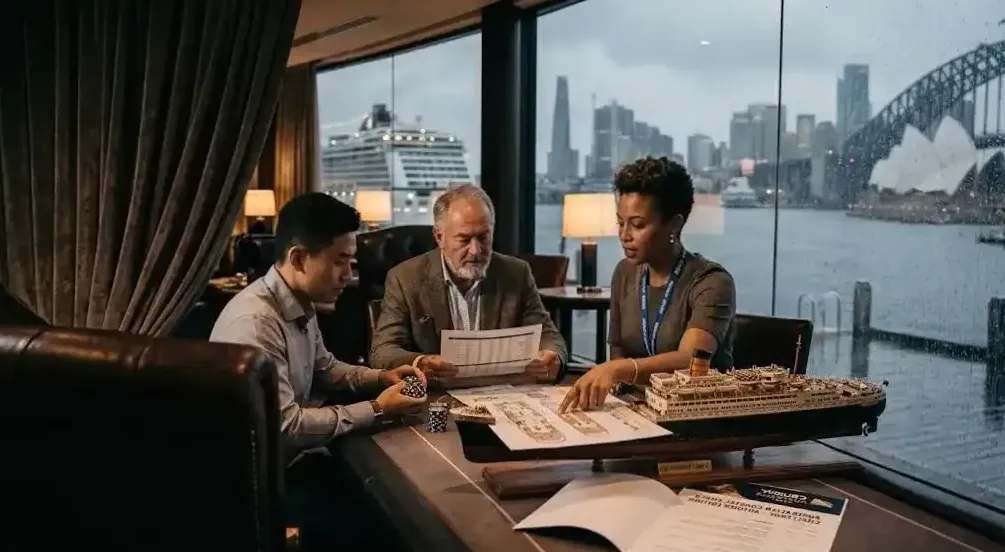
The business case writes itself if you frame it honestly: a poker charter costs roughly what a mid-tier venue hire plus catering costs, includes the entertainment and production in the same line, and produces measurable social outcomes that a survey can actually capture. We suggest clients survey guests a fortnight later on one question: name two colleagues you spoke to for the first time at the event. The answers make the repeat booking easy. When you are ready, the producers can put together a format brief matched to your headcount and season within one business day.
If You Only Remember Three Things
- Random seating plus a shared game outperforms every forced icebreaker.
- The table shows real colleague character in a way meetings never do.
- Match the format to the brief: mixing, teamwork, celebration or training.
Tom Ellery
Tom produces the corporate calendar and has watched poker tables fix more broken team dynamics than any consultant he has met.
Ready to Write Your Own Story?
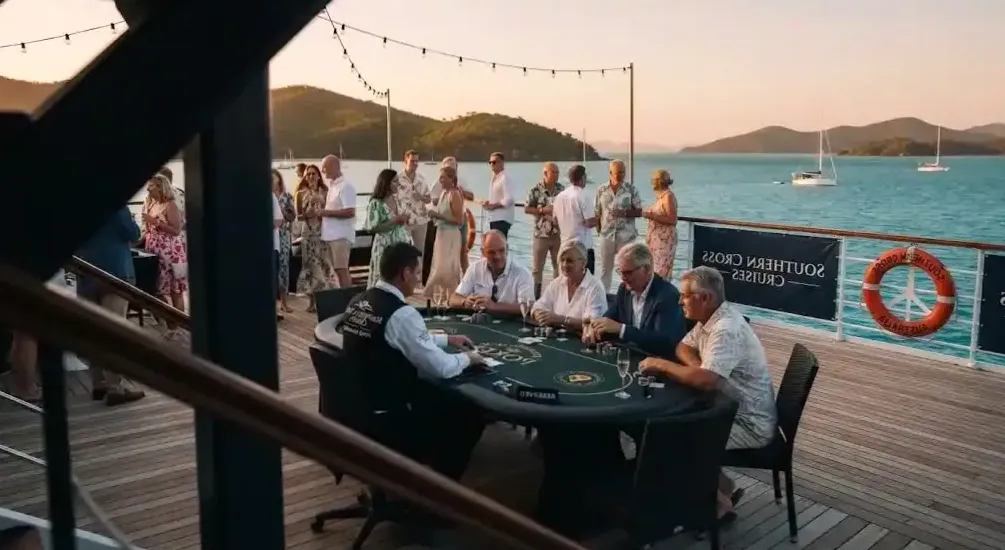
Everything in this guide happens better on the water. Tell us about your event and a producer will map it inside one business day.